FUNCOPS, a Farmington Youth program delivers a lot more than an afternoon of fishing.
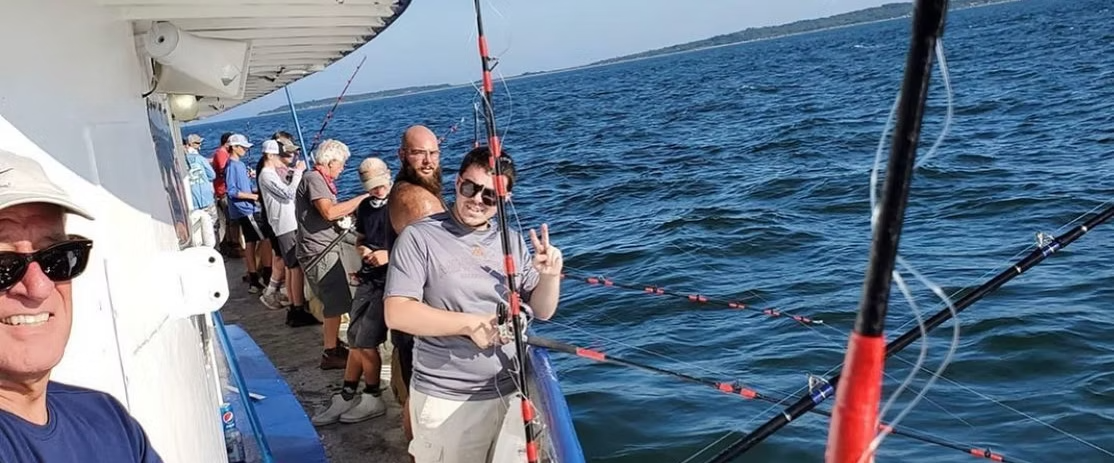

When Chris Montes is asked to describe the Farmington Youth Services program FUNCOPS, he mentions deep sea fishing, laser-tag, cookouts and go-karting, which he says “was phenomenal and gave me a big bruise.” Then Montes, Farmington Youth Services’ juvenile justice coordinator, quickly changes the conversation to what the program is really about: building connections.


“We get the police and the kids together to do fun things,” says Montes. “The police go without uniforms or guns, of course. The kids see the police as real people. After they fish or bowl together, their whole idea of what a cop is has changed, and that has a huge impact.”


FUNCOPS (which stands for Farmington Unionville Community Officers Provide Support) is a program designed to develop positive relations between police and at-risk town youth. It’s run by Farmington Youth Services and funded by the Farmington Community Chest, and it delivers numerous benefits to the community.


Building Trust


“The goal is to build relations so middle and high school students see police as real people they can trust,” says Montes. “If they are involved in something inappropriate and the police enter the picture, instead of producing anxiety we’re trying to bring that down.”


Montes says the goal is to have kids think instead, “Hey, I know that guy and I can go to him when I need him. He’s on my side.”


“We’re trying to build that relationship and that perspective,” Montes says. “Often we’re not working with kids who are straight-A students. A lot of the time we’re working with kids who are referred to us by the police or by the schools for something. This program and the impact it’s making is significant.”


Reducing resistance and rebellion


Relationships result in less resistance. “Rules without relationships equal resistance and rebellion,” says Bob Marsh, Farmington Youth Services youth coordinator who runs FUNSCOPS with Montes. “It builds relationships between police and kids. That’s important in a community because if kids are going to see officers as real people and not as threats, they need to do real-people things with them.”


More Understanding


The program affects not only the way our youth see police, but also how the police perceive kids.


“Cops can say, ‘I know this kid, we went fishing together.’ They can now hopefully understand kids are having their own stories of struggle,” Marsh says.


Montes shares a recent story: “During the pandemic, some of the kids built a fort along the river on town property. It’s illegal to do that without town permission. They weren’t getting into trouble. But someone complained. Cops came and dismantled the fort. They said: ‘I’m sorry, but we have to do this.’


“No one got arrested or in trouble. In fact, one of the policemen said he would have done the same thing when he was a kid. ‘If you get some money together,’ one of the cops said, ‘I’ll get some cops to come and we’ll build a fort on private property for you.’


“The police officer had gotten to know the kids because of FUNCOPS, and this incident ended in a positive way because of it.”


Delivering Happiness


Research suggests that experiences, more than possessions, make people happier and generate positive memories.


“As soon as we got back after going go-karting, we heard, ‘When are we going again?’” says Marsh.


There’s a diverse mix of participants. “Most are first involved in Farmington Youth Services. Some may be there because of truancy or being defiant at school. Others come through counseling referrals,” says Marsh. “But some just come because they heard it’s a lot of fun and they want to go fishing or to a baseball game. Often someone asks if they can bring their sister or brother and we say, ‘Come if you want to come! The activities are open to all youth in the community.’”


The group activities attracted around 30 participants before the pandemic, and Marsh and Montes are excited to bring the numbers up again.


“We’re grateful for the support of the Farmington Community Chest to make this program and its tremendous impact possible,” says Montes.


Montes, a psychologist and professor with 30-plus years of experience in counseling, believes it’s crucial that people get to know each other and converse on a human level.


“Imagine the world doing FUNCOPS,” Montes says. “Put people together, build relationships, get to know each other, so when one of them falls, the other picks them up.”


The Farmington Community Chest is proud to support FUNCOPS because it aligns with our organization’s mission to increase the safety and well-being of the Farmington-Unionville community.
By Nicholas Ricard November 24, 2025
It’s a quiet and pressing problem in Farmington—many families are struggling to feed themselves. And it’s why the Farmington Community Chest (FCC) has been a significant supporter of the Farmington Food Pantry. “Hunger may be less visible in Farmington than other communities, but it is still a reality for the many individuals and families who are unable to put enough food on the table,” said Amy Palumbo, president of FCC. Now one of FCC’s recent grants is having a profound impact. Christina Ramsay, president of the Farmington Food Pantry explained, “Our grant from FCC enabled us to purchase a commercial refrigerator and freezer. These large appliances mean we can now sustain and stockpile more food for the hungry. This has made a huge difference to our clients. We are thrilled, especially because the number of people we serve keeps growing.” There used to be a limit on items, such as meat, milk, yogurt, eggs and frozen goods, that the food pantry could store. Turning away food donations due to our limitations was frankly heartbreaking according to Ramsay. She added, “With the expanded refrigerated storage, the pantry is much better able to collect, store, and distribute food.” “FCC is really pleased with our grant’s impact. And there’s a lesson to be learned—meaningful things can be accomplished when local organizations collaborate and examine needs together,” said Amy Palumbo, president of FCC. FCC’s annual financial support of the Farmington Food Pantry helps nourish neighbors in need. Annual grants from FCC have helped broaden the reach of the pantry, according to Ramsay. Currently, 200 families from Farmington and Unionville depend on the pantry, which is located in Amistad Hall on Main Street. More than 30 people volunteer to keep the pantry’s complex gears operating. Volunteer Robin Balboni said, “We love the clients. We do everything we can to provide a confidential, respectful, and welcoming environment.” Ramsay said that the only thing the pantry knows about its clients is that they need our help. She explained that approximately 1,500 pounds of food are distributed on each of the seven days that the pantry is open every month. While FCC is a critical funder of the pantry, there are others. Ramsay emphasized that the pantry could not succeed without its long list of partners. Examples are Foodshare, Gifts of Love, Highland Park Market, Shop Rite of Bristol, and Stop and Shop. The pantry also receives fresh donations from Sub-Edge Farms, Hien Farms, Maple Hill Farms, and Jillybean’s Farmstand. “There is no understating the impact of our partners. Foodshare is essential, but each partner is literally helping to provide a food lifeline to people who are food insecure in our community,” said Ramsey. Details about when, where and how to access pantry help is found here: https://www.ffpct.org/
By Nicholas Ricard November 24, 2025
It seems like a stretch to say that the efforts of a small non-profit like the Farmington Community Chest can potentially save lives. But FCC’s grant to the Farmington Fire Department to purchase thermal imaging cameras proves that FCC’s capacity to potentially save lives is no exaggeration. The new thermal imaging cameras mean that town firefighters now have the latest technology to find fire victims, identify a fire’s hotspots/spread, and target firefighting efforts and resources quickly and effectively. “The thermal cameras are life-saving,” says Russ Nelson, Fire Chief of the East Farms Station. Because the thermal imaging cameras measure heat, they can find people in a completely dark room. Nelson calls the cameras an innovation that the department couldn’t secure through the town’s budget process. But, he says, now he and his firefighting colleagues can “thrive” with the new technology provided by the thermal imaging cameras. On April 8, 2019, FCC President Amy Palumbo presented the $13,300.00 check that funds cameras for each of the town stations. “We know these cameras are indispensable. They should give town residents a new sense of security in the event of a fire. We also hope town residents, businesses, and others will see the FCC grant for this technology as an impetus to add FCC to their list of charitable giving.” Fire officials agree. “This gift from FCC should be resonating with town residents. It’s outstanding that their firefighters now have it. And it’s outstanding that the Farmington Community Chest is here to support all of us,” says Chief Nelson.
November 24, 2025
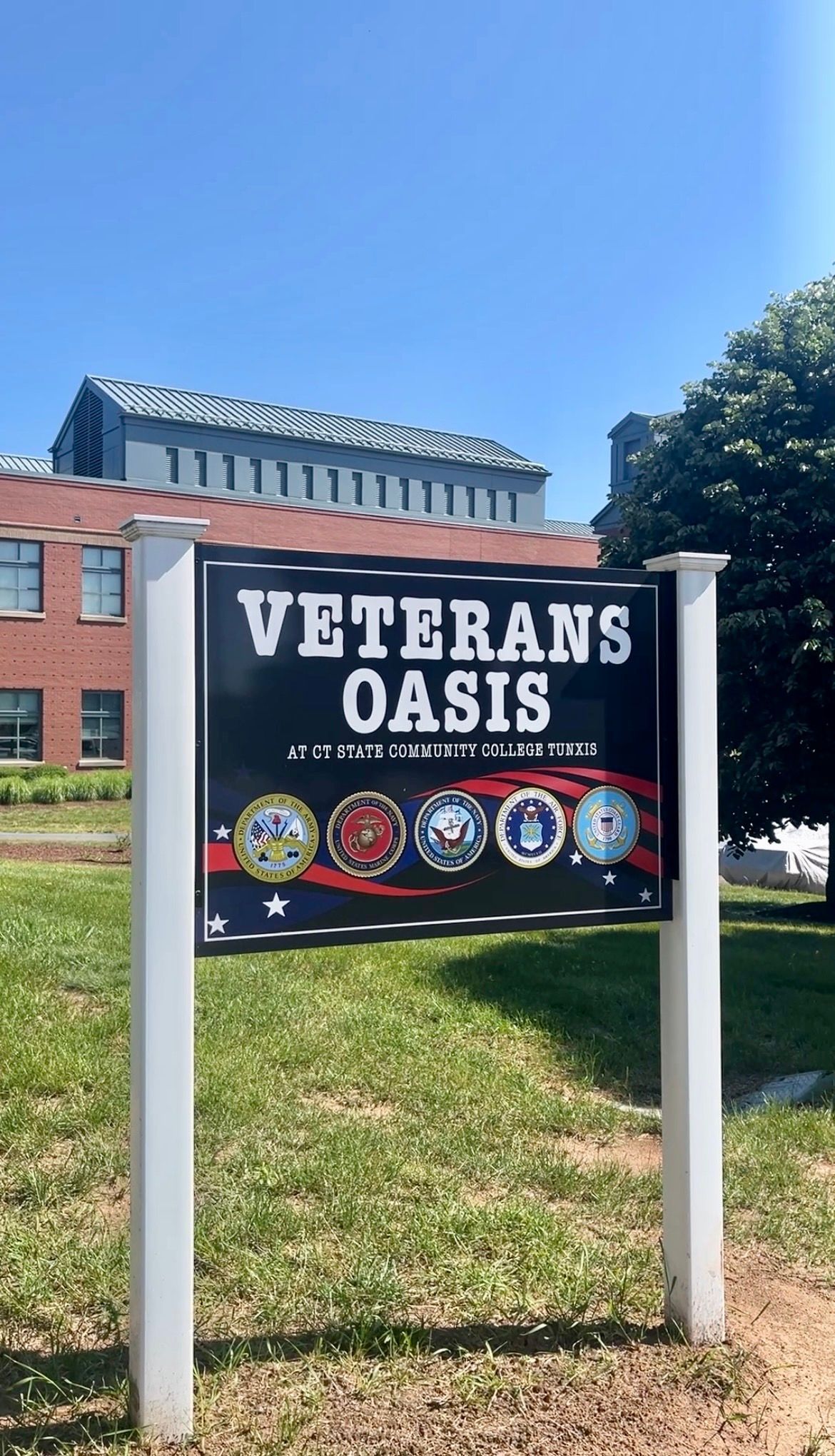
At first glance, the OASIS at Tunxis Community College seems like a typical college lounge. Sounds of laughter and the smell of freshly brewed coffee fill the air. Young adults in hoodies snack and chat in the small kitchen and lounge on the oversized couch in the adjoining living room, the way typical college students would chill out between classes. But this isn’t an ordinary student lounge, and the students who fill it aren’t ordinary students. The OASIS, which stands for Operation Academic Support for Incoming Service Members, was established at Tunxis in 2008 to “support returning veterans who are transitioning back to civilian life and trying to better their education.” With a purpose like that, it’s no wonder the Farmington Community Chest (FCC) decided to support the OASIS—especially since the program is so consistent with the mission of the FCC (to improve the health, educational opportunities and life of the community). Karen DeBari is an English professor at Tunxis who runs the OASIS. She got involved with it because she saw veteran students struggling to keep up in class. “I saw a need,” said DeBari. “I saw the veterans in my class struggling, trying to adapt. They would gravitate toward each other in class. I sensed they needed a special place to spend time together.” Fortunately, the state of Connecticut recognized this need as well, and in 2007, special spaces were created in the state’s public colleges and universities so that veterans transitioning to academic life could have a place to hang out. The OASIS at Tunxis started as one room and not much else. DeBari sensed that the students needed more than just a place to hang out. She saw that many were struggling financially and emotionally. “I started bringing in sandwiches from home and asked my friends and the other teachers to donate whatever they could,” said DeBari. Soon after, she connected with the FCC, which has contributed monthly to the OASIS ever since. The lounge grew to what is now three connected rooms: a meeting/study room with computers, a small kitchen stocked with drinks and snacks, and a living room with a large TV. Photos, newspaper clippings and U.S. and military flags hang on every wall. “There are about 200 veterans on campus, and the OASIS gets about 20 visitors a day,” DeBari says. “As anyone who has shopped for a family knows, that means a lot of grocery shopping.” She estimates she spends about $150 a week to stock the kitchen. While veteran student lounges can now be found in public colleges throughout Connecticut, those who hang out at the Tunxis OASIS have made it into a center with a broader mission—they have turned the center into a home. They have become a family. “The veterans tell me how important the OASIS is and has been in helping them return from deployment and acclimate to civilian and student life,” says DeBari. “They feel like the OASIS is a place where they belong and are accepted and can speak freely in a judgment-free place.” Students agree that the OASIS has turned into more than just a place on campus for student veterans. “It is a place to surround myself with people who get me—it’s more like a family,” says a student. Over the past few years, donations have increased, which has allowed the OASIS to offer more programs and support for the veterans. DeBari organizes on-campus social events for the veterans as well as off-campus activities. DeBari sees the impact the OASIS has made in so many lives and says that’s what keeps her committed. “I have so many fulfilling stories and proud moments,” she says. “Some are very personal. Graduation is always a very special time. I have veterans who have graduated or moved on to another college and stay in touch. I have attended weddings and baby showers, and those events are always fun and let me know that our veterans can have success stories after the military.” The impact the OASIS has made in the areas of health, education and community life wouldn’t have been possible without the contributions and support from organizations like FCC. “I run the OASIS solely on private donations, so we are incredibly grateful for organizations like the Farmington Community Chest who support our mission,” said DeBari. As proud as she is about the OASIS, don’t think for a moment this means DeBari is slowing down. “I’m always talking to our veterans and seeing what is needed with every new group of veterans who start the semester,” she says. “Now we’re working on getting dental care for our veterans.”